
 By admin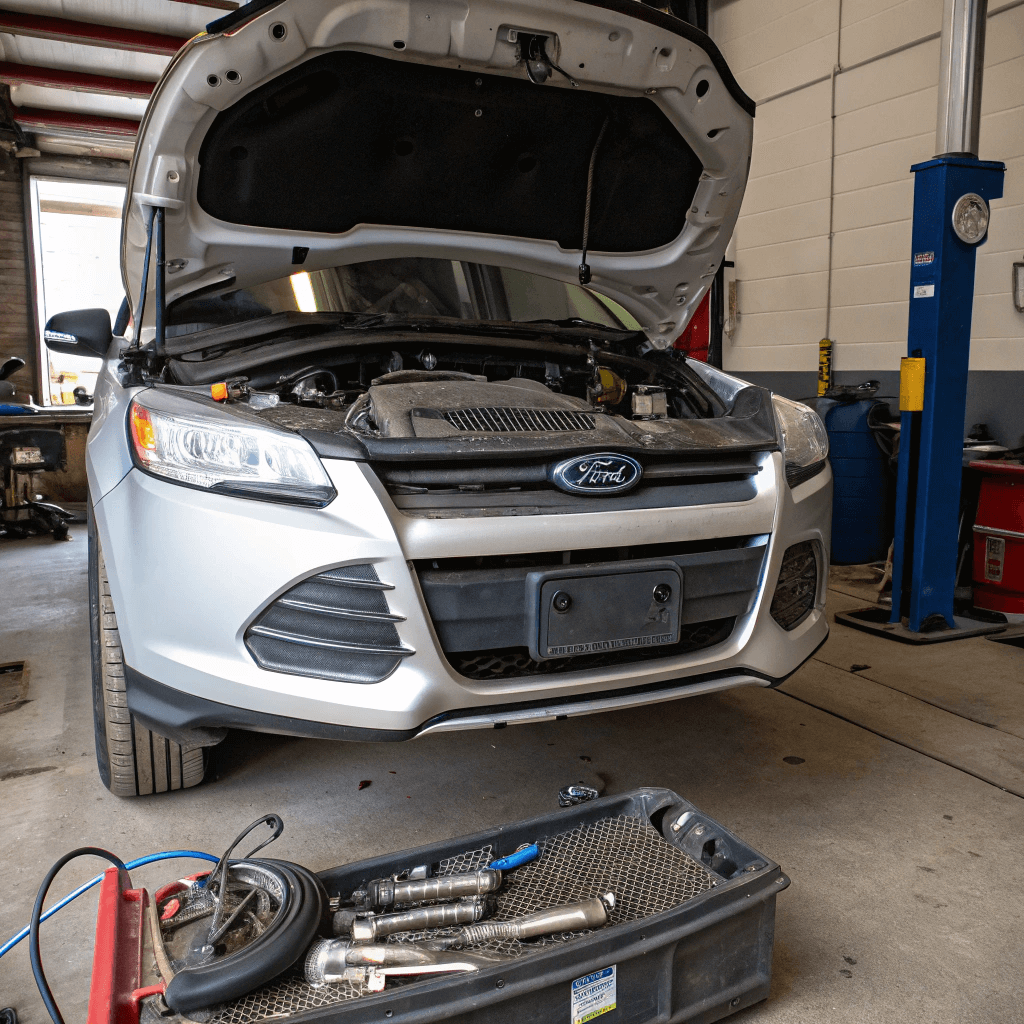
Neutralizers on Ford vehicles fail in different ways. Some owners complain about crumbled honeycombs inside, while others discover cracks on the outer shell. The reason lies in where exactly this component is located and what loads it experiences in a particular model.
Close to the Engine – Hot and Dangerous
In the second and third generation Focus, engineers installed the neutralizer almost directly against the motor, integrating it into the manifold. The decision makes sense – the device heats up faster and works more efficiently. But there’s a flip side: temperatures there reach extreme values, and the ceramic inside experiences constant thermal shocks.

If your unit has already served its lifespan, don’t rush to throw it away – it contains precious metals and has residual value. On the Autocatalystmarket platform, you can check current prices for used Ford catalytic converters for sale of different models and find a buyer who specializes in extracting platinum and palladium.
For the fourth generation Mondeo and Escape, designers chose a different path – they placed the device further back, under the car’s underbody. The temperature regime there is milder, but vibrations from the road and mechanical loads on the housing appear instead.
Internal Destruction from Overheating
When the element is located near the engine, the ceramic honeycombs operate under harsh thermal shock conditions. Cold start, sudden acceleration, sitting in traffic with the engine running – temperature fluctuations can reach 400-500 degrees in mere seconds.
Signs of internal destruction:
- Power loss and hesitation during acceleration – honeycomb fragments block the passage of spent gases, the engine suffocates
- Rattling metallic sound at startup or at idle – pieces of ceramic rattle inside the housing
- Metallic dust on spark plugs – small fragments get back into the combustion chamber
Overheated ceramic becomes brittle. The honeycombs begin to crumble from the central part, where the heat is maximum, gradually turning into powder.
External Destruction from Vibrations
Neutralizers under the underbody suffer differently. Constant shaking on rough roads is transmitted through the mounts directly to the housing. Welded seams experience alternating loads, the metal fatigues.
Symptoms of external damage include gas leaks with characteristic hissing, visible cracks on the housing when inspected from below, and rust around the seams. For the Escape, the situation is more complicated – the long gas outlet system due to all-wheel drive creates resonant vibrations at certain RPMs, which accelerates wear.
Understanding your vehicle’s design helps predict the nature of wear and take timely measures. This extends the life of both the neutralizer itself and the engine as a whole.