
 By admin
Technological advances are affecting all areas of life, including the gaming industry. For this industry, it opens up new horizons that seemed like science fiction just a few years ago. Although quantum computers are still in the early stages of application, their potential in game development is already being actively discussed by researchers, engineers, developers, and gamers. In this article, we will discuss the possibilities that quantum computing can bring, how game mechanics will change, and why this technology will become an important part of the industry’s future.
Quantum computational principles and their impact on game design
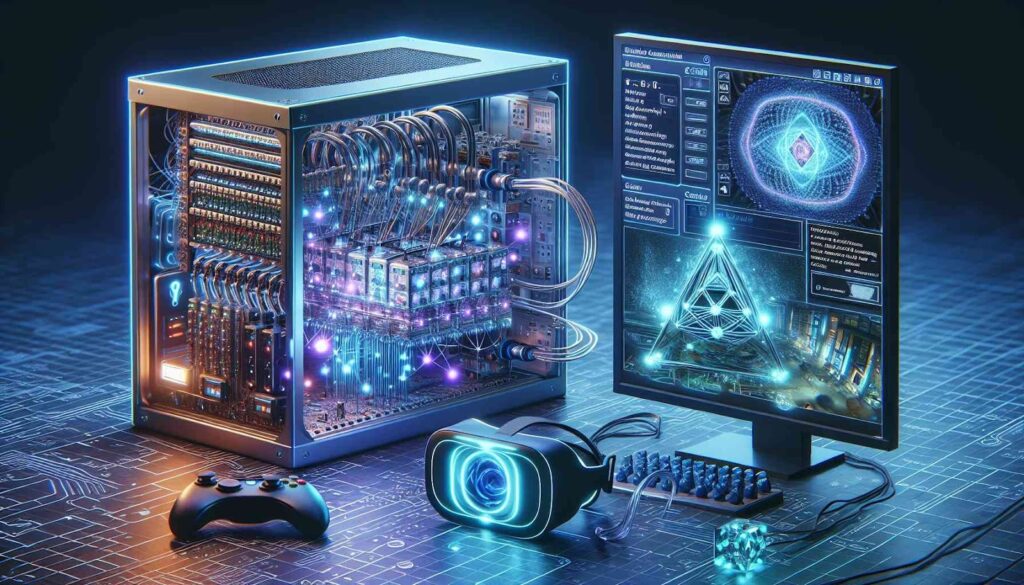
Quantum computing is a complex system based on superposition, entanglement, and quantum interference. These properties allow for the simultaneous processing of huge amounts of data and the execution of mathematical calculations very quickly. Unlike classical bits, qubits can exist in multiple states simultaneously, making them suitable for solving extremely complex problems. For game development, this means the emergence of new types of simulations that require significant computing resources.
One of the main areas of application for quantum algorithms could be physical simulations. Modern engines such as Havok and Unreal Physics, although effective, require constant improvement. When it comes to complex destruction models, detailed object interactions, and environmental behaviour, quantum systems can make them easy to calculate.
This approach will expand the toolkit of developers and change the very principles of building game worlds. Procedural generation, which now runs on randomness and algorithmic patterns, will be able to use quantum optimization to create unique landscapes, economic systems, or scenarios that never happen again, making video games even more unique.
Quantum optimization for AI, esports analytics, and large-scale simulations
Another area of application for quantum computing is the optimisation of artificial intelligence in games. Since quantum algorithms are capable of processing large amounts of information, they can analyse thousands of strategies, predict player reactions, and adapt NPC behaviour to the user’s style. This will enable the creation of unique games where NPCs don’t just react to actions — they form dynamic strategies that look natural and realistic.
The potential for applying quantum methods in esports analytics lies in the same realm. For example, these technologies can be used to analyse meta in competitive disciplines. This will allow teams to create effective strategies and better prepare for the next cs major and other esports tournaments. In addition, specialised platforms integrated with quantum optimisation modules can also be useful in preparation, as such systems are capable of calculating match scenarios with an accuracy unattainable by classical approaches.
In addition, quantum optimization can help in creating large multiplayer worlds with hundreds of thousands of simultaneous interactions. Distributed economy, balance of resources, modeling of markets and behavior of the population – all this can work more accurately and efficiently thanks to quantum algorithms.
Quantum-enhanced procedural generation and environment modeling
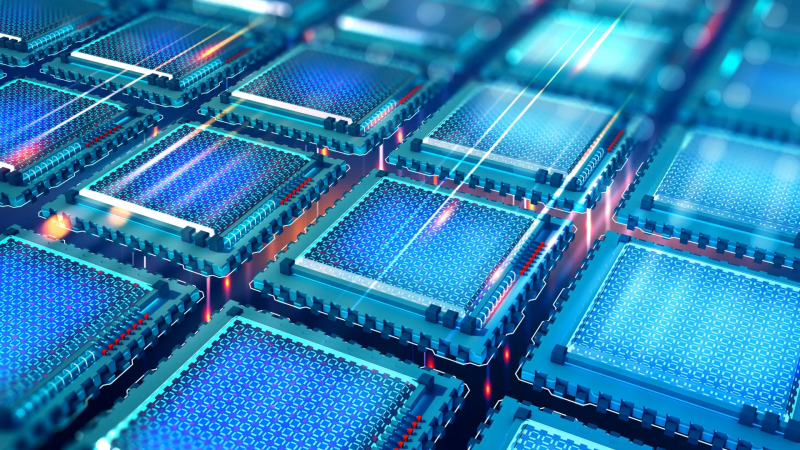
Procedural generation has long been one of the main tools for generating game worlds. This technology significantly saves developers’ time, but quantum methods can shift it from the category of ‘convenient tool’ to the level of ‘game design foundation.’ Today, even the newest generators rely on randomness and have quite a few limitations when it comes to creating believable locations. A quantum system can form a world that looks not just realistic, but naturally alive.
For example, an ecosystem simulation in a conventional computer is limited by memory and computation time. In quantum, hundreds of parameters can be processed in parallel, which allows you to create games with a long-term, unpredictable development of events. Quantum methods can also improve lighting modeling, which will give the game environment more dynamism.
In VR and AR games, these technologies can also benefit. They will improve the physics of objects, textures, light reflection and the behavior of dynamic objects. Players will feel inside a world that responds to them in real time and shows no technical compromises.
Challenges, limitations, and the realistic timeline for game developers
Despite its enormous potential and the advantages listed above, quantum computing is not yet ready to become the primary development tool. The main drawbacks are the instability of qubits, significant noise levels, high hardware costs, and a limited number of specialists who understand quantum algorithms.
Currently, only a small number of modern computers are fully-fledged universal machines capable of performing quantum computing. Developers will be able to use these technologies more as an auxiliary tool for optimisation or as a cloud service integrated into a regular pipeline. This approach will eventually become available to game studios working on large games.
Another drawback is the complexity of combining quantum algorithms with modern engines. The industry needs new SDKs, new languages for describing quantum scenarios, as well as special modules capable of transferring data from quantum systems to classic game design tools. Although improvements in technology may take a long time, progress in this area is already noticeable.
It is also important to understand that quantum computing will not solve all technical problems. There are tasks for which classic GPUs can be used more efficiently. Therefore, the future of game development is likely to be based on hybrid systems, classical processors will play their role, and quantum processors will be used for the most complex and resource-intensive tasks.
Conclusion
In this article, you learned how quantum computing can be applied in the gaming industry. Although the technology is still in its infancy, its impact on the industry could be significant. Quantum algorithms can support existing gameplay types and create new ones, unique scenarios, and provide an unprecedented level of realism. With the right development, game developers will be able to use quantum computing to create unique projects, and quantum technologies will become not science fiction, but a tool that will determine the development of the industry.